Beyond the Base Pay: How Staffing Agencies Can Be a Cost-Effective Solution
Many school districts facing budgeting challenges believe that staffing agencies are a “luxury expense”. This is a common misconception that is misleading when you dig into the costs associated with recruiting, hiring, training, and replacing staff within school districts.
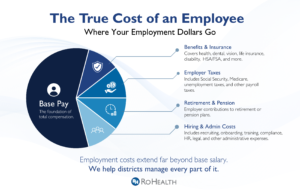
When comparing an agency bill rate to an employee’s salary, the agency often appears more expensive. However, salary is only one part of the total employment equation. Benefits, taxes, retirement contributions, recruiting expenses, onboarding, compliance requirements, and ongoing administrative support all contribute to the true cost of employing a healthcare professional.
When these expenses are considered, the gap between direct hiring and agency staffing is often much smaller than it initially appears. In many cases, there is cost savings when working with agencies. That savings, paired with the flexibility, increased support, and staff quality, makes top staffing agencies a great school district partner.
-
At a Glance: The $60,000 Nursing Role
While a district may budget $60,000 for a nurse’s annual salary, the total employer cost can be significantly higher.
- Base Salary: $60,000
- Benefits and Insurance: $23,700+
- Employer Taxes: $5,000+
- Retirement Contributions: $6,000+
- Hiring and Employee Maintenance: $14,475
- Total Annual Employer Cost: Approximately $109,272
In this example, salary accounts for only about 55% of the total employment cost. The remaining 45% comes from expenses that often aren’t visible when evaluating staffing budgets.
The “Invisible” Multiplier: Understanding Total Employment Costs
To understand the value behind an agency bill rate, it’s important to look beyond wages alone.
Benefits, Taxes, and Retirement
Healthcare benefits are among the largest employment expenses. Employer-sponsored health insurance, dental and vision coverage, disability insurance, and retirement contributions can add tens of thousands of dollars to the cost of employing a healthcare professional.
Employers are also responsible for payroll taxes, including Social Security, Medicare, and unemployment taxes, which increase the total cost of employment beyond the employee’s salary.
Hiring and Employee Maintenance
One of the most overlooked expenses is the cost of recruiting, onboarding, and maintaining qualified healthcare staff.
These costs often include:
- Recruitment advertising
- Candidate screening and interviews
- Background checks and fingerprinting
- Credential verification
- Compliance monitoring
- Payroll administration
- HR support
- Employee onboarding
National estimates place these costs at approximately $14,475 per employee.
Why Comparing Bill Rates to Salary Creates a False Comparison
When districts evaluate staffing proposals, it’s common to compare an agency’s hourly bill rate to an employee’s hourly wage.
The challenge is that these numbers represent very different things.
An employee’s wage typically excludes benefits, taxes, retirement contributions, recruiting costs, compliance requirements, and administrative support. An agency bill rate often includes much of that infrastructure.
In other words, districts are frequently comparing a fully supported staffing solution against only a portion of their own employment costs.
A more accurate comparison is:
Agency Bill Rate vs. Total Cost of Employment
What Districts Receive Beyond Staffing
Agency bill rates don’t simply cover wages. They also support services designed to reduce administrative burden and help maintain continuity of care.
These services may include:
- Continuous recruitment to help fill vacancies more quickly
- Clinical support and school-based training for providers
- Coverage flexibility for absences, leaves, and turnover
- Credentialing and compliance monitoring
- Scheduling and account management support
These resources can help districts reduce the operational challenges associated with healthcare staffing while maintaining consistent student services.
Looking Beyond the Number
Instead of asking:
“Is the agency bill rate higher than salary?”
A more useful question is:
“What is the true cost of employing and supporting this position?”
When districts evaluate the full picture, including benefits, taxes, retirement contributions, recruiting expenses, compliance requirements, and staffing continuity, the value of agency staffing often becomes much clearer.
Because the real comparison isn’t agency bill rate versus salary.
It’s the agency bill rate versus the total cost of employment.
At Ro Health, we pride ourselves on our ability to deliver prepared providers, with school-specific training, best-in-class customer service, and per diem staffing to alleviate staffing gaps. Learn more about Ro Health’s staffing solutions here.
Sources
- U.S. Bureau of Labor Statistics. Employer Costs for Employee Compensation (ECEC). https://www.bls.gov/ecec
- Kaiser Family Foundation. 2025 Employer Health Benefits Survey. https://www.kff.org/health-costs/2025-employer-health-benefits-survey
- Internal Revenue Service. Topic No. 751, Social Security and Medicare Withholding Rates. https://www.irs.gov/taxtopics/tc751
- Nurse.org. School Nurse Salary Guide. https://nurse.org/education/school-nurse-salary
- Paychex. Average Cost Per Hire. https://www.paychex.com/articles/human-resources/cost-of-hiring-an-employeeEngagedly. Average Cost Per Hire in 2024.https://engagedly.com/blog/average-cost-per-hire-employee
- U.S. Bureau of Labor Statistics. Occupational Outlook Handbook: Registered Nurses. https://www.bls.gov/ooh/healthcare/registered-nurses.htm
- IRS. Topic No. 759, Form 940 – Federal Unemployment Tax (FUTA). https://www.irs.gov/taxtopics/tc759
- Kickstand Insurance. Workers’ Compensation Rates for Healthcare Workers. https://www.kickstandinsurance.com/blog/workers-compensation-rates-for-healthcare-workers
- Society for Human Resource Management (SHRM). 2025 Annual Benefits Survey Executive Summary. https://www.shrm.org/content/dam/en/shrm/topics-tools/research/employee-benefits/2025_annual_benefits_survey_executive_summary.pdf